

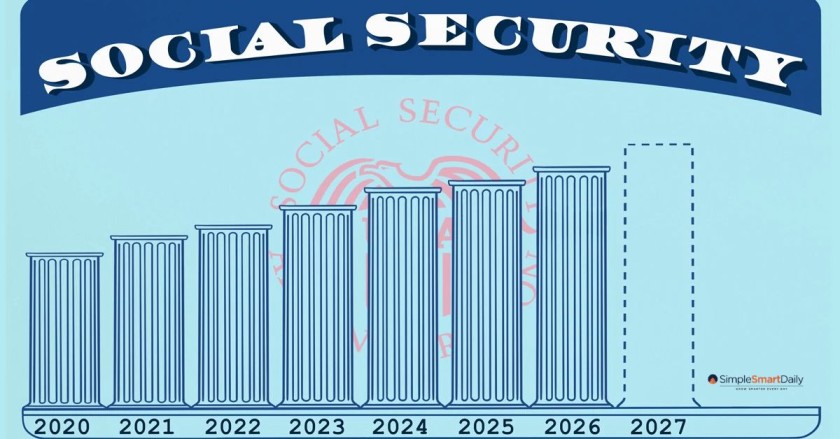
Social Security 2027 COLA, cost-of-living adjustment (COLA) will be an important number for millions of retirees and other beneficiaries who depend on monthly payments to manage everyday expenses. While the official 2027 COLA will not be known until later in 2026, current inflation trends and economic data can help provide an early indication of what beneficiaries might expect. Understanding how the adjustment is estimated can make it easier to plan ahead for changes in monthly income.
For retirees, even a small COLA change can affect the amount available for housing, groceries, healthcare, utilities, and other essential costs. However, a forecast is not the same as the final increase, and several months of inflation data are used before the official figure is announced. This guide explains what to expect from Social Security’s 2027 COLA, how forecasts are developed, and what the potential adjustment could mean for retirees and their household budgets.
You can also read; Diana Shnaider: The Rising Tennis Star Capturing the Attention of the Sports World
Why This Matters to You
The 2027 Social Security COLA matters because it determines how much monthly benefits will increase to help beneficiaries keep pace with inflation. For retirees who rely heavily on Social Security, even a modest percentage change can affect their annual income and ability to cover everyday expenses. A higher COLA may provide additional money each month, while a lower adjustment could mean less relief from rising prices.
It is also important to remember that a COLA increase does not automatically mean retirees will have more spending power. Housing, food, healthcare, insurance, and other costs can also rise. Looking at the projected COLA alongside expected expenses can give retirees a more realistic picture of their finances for 2027.
What Is COLA and How Does It Work?
COLA stands for Cost-of-Living Adjustment. Social Security uses COLA to adjust benefits when inflation increases the cost of goods and services. The adjustment is designed to help Social Security payments maintain purchasing power over time.
The annual COLA is based on inflation data from the Consumer Price Index for Urban Wage Earners and Clerical Workers (CPI-W). The calculation compares the average CPI-W for July, August, and September with the average from the same three months of the previous year.
Here’s how it works:
- The government collects CPI-W inflation data for July, August, and September.
- The three monthly figures are averaged together.
- That average is compared with the corresponding average from the previous year.
- The percentage increase becomes the Social Security COLA.
- The new adjustment generally takes effect with December benefits, which are received by most beneficiaries in January of the following year.
The Latest Social Security 2027 COLA Forecast – What Experts Are Saying

Early forecasts for the 2027 Social Security COLA are estimates rather than the final benefit increase. Forecasts can move during the year as inflation data changes, so retirees should avoid treating a preliminary percentage as guaranteed.
A projection around 3.9% would represent a noticeable increase compared with the 2026 COLA, but the final number will depend on the CPI-W data used in the official calculation. The most reliable figure will come from the Social Security Administration after the September inflation data becomes available.
How Much More Money Could Retirees Get in 2027?
The amount of additional money a retiree receives will depend on their individual Social Security benefit. A 3.9% increase would mean multiplying the current monthly benefit by 1.039.
For example, someone currently receiving $2,000 per month would see an estimated increase of about $78 per month, bringing the payment to approximately $2,078. Someone receiving $2,500 would see an estimated increase of about $97.50 per month. These examples are illustrations only, because actual benefits vary from person to person.
Why Did the Forecast Go Up from 2.8% to 3.9%?
COLA forecasts can change because they are based on evolving inflation expectations and incoming economic data. If prices for categories included in the CPI-W rise faster than previously expected, analysts may revise their projected COLA upward.
A change from 2.8% to 3.9% therefore does not mean Social Security has already approved a 3.9% increase. It simply means that newer inflation information or projections point toward a potentially larger adjustment. The official calculation still depends on the required July-through-September CPI-W data.
What Historical COLA Numbers Tell Us About 2027
Historical COLA figures show that annual adjustments can vary considerably depending on inflation. Some years have produced relatively small increases, while periods of stronger inflation have resulted in substantially larger adjustments.
This history is useful because it demonstrates why one year’s COLA should not automatically be used to predict the next year’s increase. Economic conditions, consumer prices, energy costs, housing expenses, and other inflation factors can change from year to year.
How Will Rising COLA Affect Medicare and Other Expenses?
A higher Social Security COLA can increase a retiree’s gross monthly benefit, but the amount actually available to spend may be affected by other costs. Medicare premiums and other deductions can change independently of the Social Security COLA.
For some beneficiaries, an increase in Social Security benefits may partly offset higher healthcare or insurance costs. For others, increases in premiums and everyday expenses could consume much of the additional income.
Other expenses that might rise:
- Groceries and household supplies
- Housing and rent
- Utilities
- Healthcare and prescription costs
- Home and auto insurance
- Transportation
- Taxes and other household expenses
When Will the Official 2027 COLA Be Announced?
The official 2027 Social Security COLA is expected to be announced in October 2026, after the September CPI-W data is released. The final calculation requires the three months of third-quarter CPI-W data used by the Social Security Administration.
Until October, all numbers are estimates. They can change if:
- July inflation differs from expectations.
- August prices move significantly.
- September inflation comes in higher or lower than forecast.
- Analysts revise their projections based on new economic data.
- The official CPI-W figures differ from preliminary estimates.
What If the COLA Is Lower Than Expected?
If the final COLA is lower than an early forecast, retirees would receive a smaller benefit increase than projected. This could make budgeting more important, particularly for households already dealing with higher housing, healthcare, or food costs.
Retirees can prepare by creating a budget based on their current income rather than relying entirely on a forecast. Once the official COLA is announced, they can update their monthly budget using the actual increase.
What If the COLA Is Higher Than 3.9%?
If the final COLA is higher than 3.9%, Social Security beneficiaries would receive a larger increase than that forecast suggests. The additional amount would depend on each person’s existing monthly benefit.
However, a higher COLA does not necessarily translate into an equivalent increase in purchasing power. If consumer prices and other household expenses also rise, some of the additional Social Security income could be absorbed by those costs.
How Can Retirees Prepare for 2027 Regardless of COLA?
The best way to prepare for an uncertain COLA is to plan around expenses rather than relying on a specific forecast. Retirees can review recurring bills, identify areas where spending can be reduced, and maintain an emergency fund when possible. It can also help to distinguish essential expenses from discretionary spending.
Once the official 2027 COLA is announced, beneficiaries can calculate their estimated new monthly payment and adjust their budget accordingly. Planning for several possible outcomes rather than assuming the forecast will be exactly correct—can provide a more practical approach to managing retirement income.
FAQs
What is the expected Social Security COLA for 2027?
Current forecasts may suggest an increase around 3.9%, but the final 2027 COLA will depend on the official CPI-W data released in October 2026.
When will the 2027 Social Security COLA be announced?
The official 2027 COLA is expected to be announced in October 2026 after the required inflation data is available.
How is the Social Security COLA calculated?
The COLA is calculated using the average CPI-W for July, August, and September and comparing it with the corresponding period from the previous year.
Will a higher COLA increase my monthly Social Security payment?
Yes. If the final COLA is higher, monthly Social Security benefits will generally increase by the announced percentage, although individual payment amounts vary.
Can the 2027 COLA forecast change before October?
Yes. Forecasts can change as new inflation data becomes available. The official COLA is not determined until the required third-quarter CPI-W figures are available.
Final Thoughts
The 2027 Social Security COLA will be an important figure for retirees and other beneficiaries planning their finances. Although forecasts can provide an early indication of what the increase might look like, they should not be treated as the final number. Inflation data through September will ultimately determine the official adjustment.
Whether the final COLA is below, near, or above current forecasts, retirees can prepare by reviewing their monthly income and expenses. Understanding how COLA works and waiting for the official announcement can help beneficiaries make more informed financial plans for 2027.

Jorge is a writer at Simple Smart Daily who enjoys covering lifestyle, technology, home, travel, trends, and practical everyday ideas. He focuses on creating simple, useful content that helps readers make smarter choices and discover something valuable every day.